


Getting around London can seem like a minor Olympic sport the first time you look at the Underground map. Coloured lines, zones, travelcards, Oyster cards, contactless payments, trains, red buses, station names that seem like distant cousins to one another… and then, suddenly, someone tells you: “You just need to change at Bank.” British humour is such a delight.
The good news is that London’s public transport system works very well. And once you’ve got the hang of a few basic rules, it stops feeling like a maze and becomes a fantastic way to explore the city.
In this guide, we’ll show you how to get around London in a practical way: which transport to use, whether an Oyster card or contactless is best for you, how the zones work, what mistakes to avoid, and what local tips can save you time, money and the odd sigh during rush hour.
The quick answer to how to get around London would be…
The best way to get around London is to combine the Underground, buses and short walks, paying by contactless card, mobile, Oyster card or Visitor Oyster card. For most adult travellers, contactless is the most convenient option. Always use the same card or device, tap it when boarding and alighting from the Underground and trains, and remember that on buses you only need to tap when boarding. TfL applies daily and weekly caps to pay-as-you-go fares, which helps keep costs under control.
Understanding London’s transport system without going mad
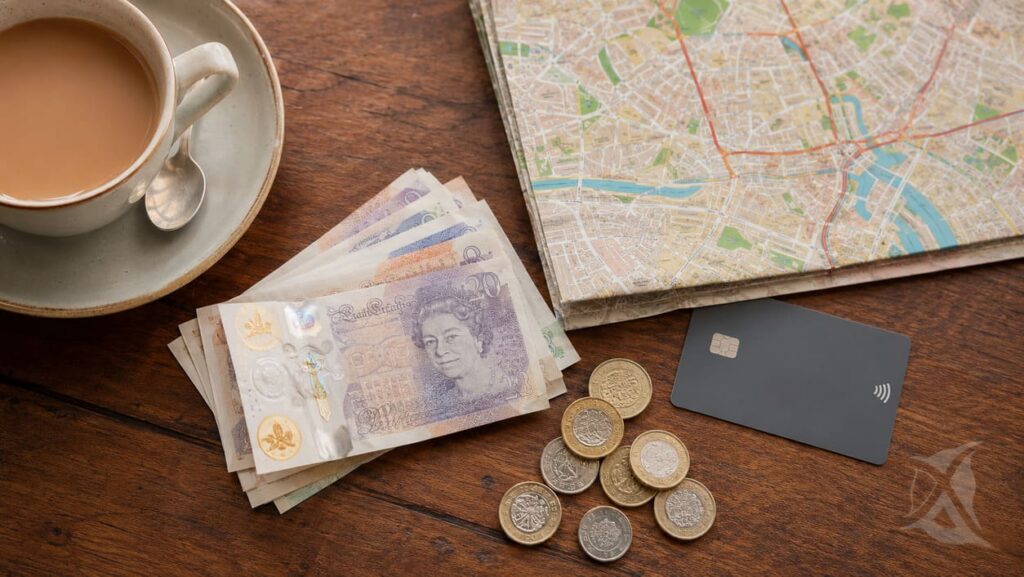
Public transport in London is mainly managed by Transport for London, known as TfL. This umbrella organisation covers the Underground, buses, the DLR, the London Overground, the Elizabeth Line, trams and some intra-city train services. Most of these can be paid for using an Oyster card, a Visitor Oyster card or a contactless card.
The first thing to understand is that London is divided into fare zones. Zones 1 and 2 cover much of the tourist centre: Westminster, Soho, Covent Garden, Camden, Kensington, Notting Hill, Tower Bridge and many places you’re likely to visit on your first trip.
The further you travel, the more zones you pass through and the more the journey may cost. But there’s no need to get hung up on calculating every single journey. If you use pay-as-you-go with an Oyster card or contactless, the system calculates the fare and applies daily or weekly limits based on the journeys you’ve made.
The London Underground: fast, convenient and full of character
The underground, or Tube, is the quickest way to travel between distant areas. It is particularly useful for crossing the city, getting to museums, railway stations, outlying neighbourhoods or attractions that are some distance apart.
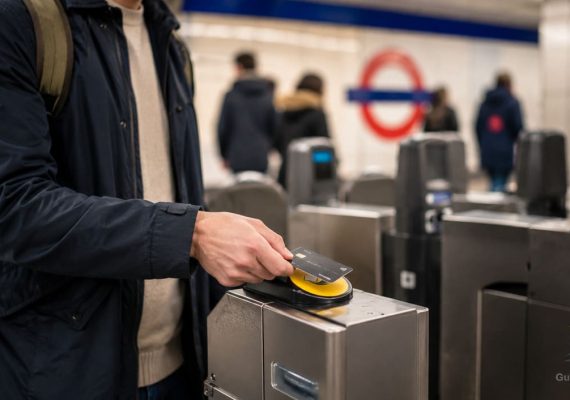
To use it, tap your card, mobile phone, Oyster card or Visitor Oyster card on the yellow reader when you enter, and tap it again when you leave. If you don’t do this correctly, the system may not recognise the journey you’ve made and may charge you the maximum fare.
The Underground works very well, but it can get crowded at peak times. This is particularly true on weekday mornings and late afternoons. If you’re travelling for leisure, try to avoid the busiest times whenever possible. Your patience will thank you for it. So will your ribs.
Local tips for using the Underground
On escalators, stand on the right if you’re not moving, and leave the left-hand side free for those in a hurry. This isn’t just a suggestion: in London, it’s almost a rule of thumb.
Always check the train’s final destination, not just the name of the line. A single line can split into several branches.
And before you end up spending ages changing trains, check whether it might be worth walking instead. Sometimes two stations are much closer on foot than they appear on the map.
London buses: cheap, convenient and with great views
The red buses are much more than just a nice photo opportunity. They’re a brilliant way to get around London, especially if you’re not in a hurry and want to see the city as you go.
To get on the bus, tap your Oyster card, Visitor Oyster card, contactless card or mobile phone on the yellow reader. You don’t need to tap when you get off. Also, London buses don’t accept cash.
A bus journey costs less than many Underground journeys and has a very handy advantage: the Hopper fare lets you take multiple buses or trams within an hour without paying again. According to Visit London, a single bus journey costs £1.75 and the daily cost for buses and trams is capped at £5.25 if you always use the same payment method.
When to take the bus
The bus is perfect for short journeys, for getting around areas not directly served by the Underground, or for relaxing whilst you continue to explore London.
It’s also ideal if you’re travelling with children, as it’s more comfortable than constantly going up and down the stairs at Underground stations. And yes, sitting in the front row upstairs still has its charm, even if you’re over ten years old. We won’t judge you.
The Elizabeth Line, DLR and Overground: the great forgotten allies
As well as the traditional Underground, London has other very useful transport options.
The Elizabeth Line is fast, modern and convenient for crossing the city from east to west. It also connects to Heathrow, making it a very attractive option for many travellers.
The DLR mainly operates in east and south-east London. It’s very handy for getting to Greenwich, Canary Wharf or the Docklands area. What’s more, many of the trains are driverless, so if you sit at the front you’ll have a sort of ‘panoramic view’. Small, absurd pleasures, but very London-esque.
The London Overground connects neighbourhoods that aren’t always well served by the Underground. It can be very useful if you’re venturing beyond the city centre.
Oyster, Visitor Oyster, contactless or Travelcard: which is best for you?
This is one of the big dilemmas for travellers. And the answer, for most adults visiting London for just a few days, is quite clear: contactless is usually the most convenient option.
TfL states that paying as you go with contactless, an Oyster card or a Visitor Oyster card is a flexible and straightforward option. What’s more, paying as you go is usually cheaper than buying single tickets and allows you to benefit from daily and weekly caps.
Contactless card: the most convenient option
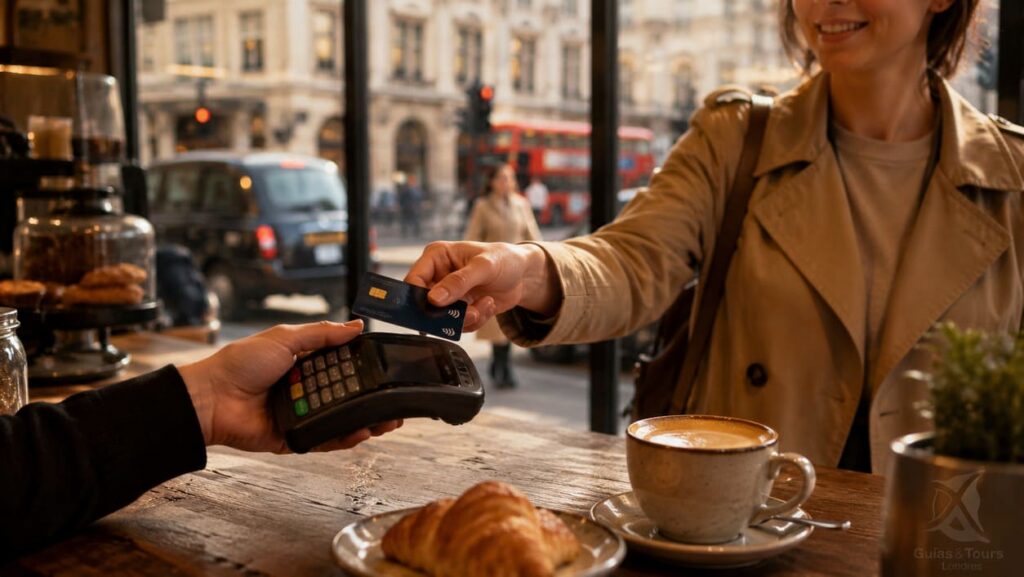
You can use a contactless bank card or a mobile device, such as a phone or watch, to pay for all TfL services. It’s quick, you don’t need to buy a physical card, and it works very well if your bank doesn’t charge high fees for payments in pounds.
Just remember: always use the same card or device. If you use your mobile to travel in the morning and then use your physical card to travel out or on other journeys in the afternoon, the system may not group the journeys together to apply the fare caps correctly. TfL makes this very clear: fares aren’t combined if you switch between your card and your phone.
Oyster Card: a good option if you prefer to keep track of your balance
The Oyster Card is a rechargeable card that you can buy in London. According to TfL, a standard Oyster Card costs £10, and you can then top it up or add a Travelcard. It can be purchased at Underground stations, London Overground stations, Elizabeth line stations, Oyster outlets and Visitor Centres.
It can be useful if you don’t want to use your bank card, if your bank charges fees, or if you prefer to keep your transport costs separate from the rest of your trip.
Visitor Oyster Card: pensada para turistas
The Visitor Oyster Card is purchased before arriving in London and comes pre-loaded with credit. TfL describes it as a convenient way to avoid queues and start travelling as soon as you arrive. It also allows you to claim a refund of up to £10 for any unused credit at machines in most Underground stations, at Visitor Centres or online.
This may be of interest if you want to have everything sorted before your trip or if you’re travelling with teenagers, as the Young Visitor discount can only be applied to Oyster or Visitor Oyster cards, not to mobile or bank contactless cards.
Travelcard: only in specific cases
The Travelcard allows unlimited travel within certain zones for a specific period. It can be useful if you’re going to be getting about a lot or if you’re staying for a week and have a clear idea of your travel pattern.
But for many visitors, paying as you go using contactless or an Oyster card is often more convenient. TfL states that paying as you go with a daily cap is cheaper than buying a Day Travelcard when travelling within Zones 1 to 9.
Daily and weekly caps: the trick you need to know
One of the great advantages of the London transport system is fare capping. This means that, when using pay-as-you-go, there is a maximum daily or weekly spend limit depending on the zones you travel through. Once you’ve reached that limit, you don’t pay any more for journeys within those zones.
TfL explains that the daily cap is calculated from 04:30 in the morning until 04:29 the following day. For adults, the daily cap in Zones 1 and 2 is £8.90, and in Zones 1 to 6 it is £16.30. On buses and trams, the daily cap is £5.25. These amounts may change, so it’s worth checking them before you travel or before publishing updates to this article.
Getting from the airports
London has several airports, and it’s best to look at each one separately. Heathrow is connected by the Tube and the Elizabeth line, so it’s usually easy to incorporate it into your journey into the city. TfL states that the Visitor Oyster card can be used on services such as the Tube, the Elizabeth line, the Heathrow Express and the Gatwick Express between the airports and central London.
For Gatwick, Stansted and Luton, it’s usually best to use dedicated trains or buses. Before you decide, check the price, journey time and arrival station. Sometimes the cheapest option isn’t the most convenient if it drops you off far from your accommodation. And after a flight, with your suitcase and that ‘I’ve no idea what time it is’ look on your face, comfort matters too.
Useful apps for getting around London
The official TfL Go app and Citymapper are two of the most practical tools for getting around London. Visit London highlights TfL Go for checking routes, balance, Travelcards and travel information, and Citymapper for its real-time routes, disruption alerts, offline maps and alternative options.
Google Maps also works well, but Citymapper is usually more precise when it comes to public transport combinations, tube exits and alternatives in the event of delays.

Travelling around London with children
London is quite family-friendly if you know the rules. TfL states that children under five travel free when accompanied by a paying adult. Children under 11 can also travel free on buses and trams, and up to four children under 11 can travel free when accompanied by a paying adult on the Underground, the DLR, the London Overground, the Elizabeth line and some National Rail services.
For children aged 11 to 15, you can ask a member of staff to activate the Young Visitor Discount on an Oyster or Visitor Oyster card. This discount allows you to travel at 50 per cent of the adult pay-as-you-go fare for up to 14 days.
If you’re travelling as a family, it’s well worth taking a closer look at this. It could mean significant savings.
Local tips to save time and money
Walk more than you think
London is a big city, but many tourist areas are closer on foot than they seem. Covent Garden, Leicester Square, Piccadilly, Trafalgar Square and Soho can all be easily linked by walking.
Sometimes it takes longer to go down to the Underground, wait, climb the stairs and come out at the wrong exit than it does to walk for ten minutes. And you get to see the city along the way – which is why you’ve come here in the first place.
Avoid unnecessary changes
Not all the shortest routes on the map are the most convenient. Some stations are huge and changing lines can involve walking down incredibly long corridors. Bank, King’s Cross or Green Park can be very useful, but they’re also great places to discover that your legs have a mind of their own.
Use the bus to see London
Some bus routes pass through really lovely areas and can almost serve as a cheap sightseeing tour. If you’re not in a hurry, heading up to the top deck and taking in the city from the window is a brilliant idea.
Don’t buy single tickets
Buying single tickets usually works out more expensively. TfL recommends pay-as-you-go travel using contactless or an Oyster card because it’s flexible, you don’t have to work out the fare in advance, and it gives you access to daily and weekly caps.
Watch out for ‘card clashes’
If you carry several cards together in your wallet, separate the one you’re going to use. Visit London recommends tapping only one card on the reader to avoid card clashes.
Check for engineering works and delays
At weekends, there may be engineering works on Underground or train lines. Before you set off, check the TfL or Citymapper app. Five seconds spent checking could save you half an hour of improvising.
Frequently asked questions you’ll have when thinking about getting around London
What’s the best way to get around London?
The best way is to combine the Underground, buses and walking. When it comes to paying, the most convenient option for most adults is to use contactless or a mobile payment app, always with the same card or device.
Is an Oyster card or contactless better in London?
For most adult travellers, contactless is more convenient because you don’t need to buy or top up a card. An Oyster card may be a better option if your bank charges fees, if you want to keep track of your balance, or if you need discounts for children.
Do you have to tap your card when leaving the Underground?
Yes. On the Underground, DLR, London Overground, Elizabeth Line and most trains, you must tap your card when boarding and alighting. If you don’t, you may be charged the maximum fare.
Do you have to tap your card when getting off the bus?
No. On London buses, you only need to tap your card when boarding. You don’t need to tap it when getting off.
Can you pay for the bus in cash?
No. London buses do not accept cash. You must pay using an Oyster card, Visitor Oyster card, contactless card, mobile phone or Travelcard.
What happens if I use one card in the morning and another in the afternoon?
The system may not group your journeys together and you could lose the benefit of the daily or weekly cap. Always use the same card or device.
Do children have to pay for transport in London?
Children under five travel free when accompanied by a paying adult. Children under 11 can also travel free on many services when accompanied by an adult, and children aged 11 to 15 can access the Young Visitor Discount with an Oyster or Visitor Oyster card.

In conclusion…
Getting around London doesn’t have to be complicated. The key is to understand the basics: use contactless or an Oyster card, make sure you tap properly when boarding and alighting, make the most of buses, avoid single-journey tickets, and don’t always rely on the Tube map when you can walk.
Once you’ve got the hang of that, the city becomes much more user-friendly. You’ll arrive sooner, spend less and enjoy the journey more – which in London is often part of the experience.
And if you want to get your visit off to a good start, our English-language tours of London are the perfect way to find your bearings, get to know the city and pick up practical tips from local guides. Because getting to know London is all well and good, but knowing how to get around from day one is worth its weight in gold.